Saturday, December 11, 2010

Can Iodine help protect the body from radiation?


Radiation is bad for the human body but can be especially dangerous for people with weakened immune systems, like babies and the elderly.

Radiation negatively affects the thyroid. The thyroid takes on radiation and damages the cells of the thyroid. This is a major health concern because the thyroid is important to the endocrine system, working with other glands to regulate other systems of the body. Low thyroid function can cause depression, infertility and immune problems.

In the article, "How Iodine May Help Protect You From Radiation Damage" by Anne Dunev (http://www.blogger.com/post-create.g?blogID=4303994759950471070), scientists have found that iodine helps protect the body from radiation because it is an antiseptic. The amount of iodine needed for the human body is 200 micrograms.

So talk to your doctor to find out what is the best ways for you to get your daily iodine to help fend off the negative effects of radiation.

Tuesday, December 7, 2010

Smoking: Not Just Bad for Your Lungs


Surgeon General's Warning: Smoking will make you ugly.

It doesn't say that on the side of cigarette packages, but maybe it should. A video posted on CNN.com reveals some of the un-sexy truths about the effects of smoking on your looks.

Dermatologist Dr. Anna Pare points out how teeth will yellow, while skin with toughen and wrinkle as a result of smoking.

Other side-effects of smoking include courser hair, brittle nails, and an overall older appearance.

Smoking hurts your health, your looks, and your wallet. Worth it? I think not.

Sunday, December 5, 2010

Smart, Cheap Ways to Ward off Winter Weight!

The following article is from the Huffington Post:

http://www.huffingtonpost.com/charlotte-hilton-andersen/exercise-tips_b_790213.html#s196313

(note: I do NOT claim ownership)

In her piece on the Huffington Post this past Friday, Charlotte Hilton Andersen, author of “The Great Fitness Experiment,” offered five ways people could keep in shape this holiday season and save money in the process. Overall, I was pleased with Andersen’s ideas, but two of them were particularly impressive. One of the techniques Andersen recommended people use to stay/get in shape this winter, is to use DVD workouts. This is a smart strategy to recommend to a 21st century America (and especially to my generation), as it combines peoples’ increasing affections for the conveniences of technology with their desire to stay/become healthy. On a personal note, Anderson’s recommendation has inspired me to use my friend’s Wii Fit to ward off the holiday weight. I also thought her suggestion of impromptu push-ups or wall-sits at work, was equally wise, as it does not require equipment of any kind, just a few spare moments and a bit of room. Furthermore, this suggestion also helps remind Americans of the importance of getting up and moving around during their work days, in order to combat the long term health effects of prolonged, sedentary behavior. As I mentioned earlier in this post, I was pretty impressed with Andersen’s suggestions and I plan to use at least the two I elaborated on in this post, myself. It’s my personal hope that other Americans follow suit, as these are great ways to keep off the holiday pounds and get in shape, without having to purchase and expensive gym membership that most people don’t even use anyway. In the context of this recession and upcoming holiday season, these suggestions make sense both from a health and monetary perspective.

Can snoring indicate heart trouble?


In life a good night's sleep can be impossible for some people to have. From snoring, to the inability to fall asleep, these factors can indicate a possible risk for heart disease and other health concerns.

In the CNN article Snoring, sleeping problems may signal heart risks by Amanda Gardner, a study is shown that snoring and other sleep related problems can be a indicator of heart risks and other health problems (http://www.cnn.com/2010/HEALTH/11/30/sleep.problems.health/index.html).

In the study, it found that people with sleep related problems were more likely to develop diabetes and heart problems because "Chronic sleep disturbances may produce high levels of stress hormones and have exaggerated cardiovascular responses, which could lead to changes in blood pressure glucose metabolism and weight" said Wendy Troxel , Ph.D.

This is a major wake -up call for many people that have sleep related problems. So if you do have any sleep related problems, do not keep it hidden. Tell your doctor about your problems and maybe there could be a cure or procedure that can help improve your quality of life.

Saturday, December 4, 2010

Are Inflated 3-D movie prices worth the headache?


“Now in 3-D!” is a phrase often associated with movies that hit theaters nowadays. Images popping out of the screen are supposed to add thrill and interactive experience for moviegoers.

But with the inflated ticket prices and goofy glasses that movie watchers wear to watch their favorite flick, is 3-D movies worth all the hype? When the ticket costs roughly $16 to $18 and with the struggling economy, spending the extra cash can be worrisome. Also for some 3-D can cause headaches and nausea. However, for others, it can be a calming escape from reality, leaving you happy and satisfied.

3-D movies can cause headaches and nausea. An article published this year in the Consumer Reports, says that about 15 percent of the movie-going audience, experience headaches and eyestrain during 3-D movies. Fifteen percent is a lot of people, and for $18 3-D movies are not worth the extra hassle.

“When I watch a 3-D movie it seems weird visually, says Jen Kelly a senior at Binghamton. “It strains my eyes sometimes, trying to focus on everything on the screen” If it was up to me I would make the movie companies hold off on 3-D movies until they have really perfected it”

3-D movies can also make people happy.

“I like 3-D movies because it’s different” says Liza Boucher, a senior at Binghamton University. “It’s funny to see things come off the screen. The ticket price is a bit steep but it’s worth it”

I Personally think 3-D movies are way too expensive. If you add popcorn and a soda you can be looking at spending about $26 per movie visit. As a college student and for anyone that has a budget to follow, spending like this can leave you broke.

3-D movies offer positives and negatives. They are fun for some people but cause headaches and nausea for others. Also with the inflated prices it can make a dent in your bank account. So in the end, it is up to you to decide if 3-D movies are for you!

Friday, December 3, 2010

Dealing with Cancer as a Child


Death is a harsh reality that everyone has to deal with in their lives. It's hard to do, especially when the departed are close to you. But how is a child supposed to deal with death when they are so young?

Emily Ciaravino, a bright-eyed and bushy-tailed BU Alumnus from Endwell, N.Y., had to handle the death of her mother at 9 years old.

Emily's mother, Susan Ciaravino, was a 42 year old wife and mother of four children when diagnosed with the cancer that would take her life a year later.

When I found out, I obviously didn't really understand it,” Emily said. “I can only remember key things through the progression of her sickness.”

The memories visibly flood her mind as she fidgets in her chair and taps her feet. She remembers being so excited to have her mother attending her fourth grade parent's day, even while being thin and sick.

A month or two later, a hospital bed was put into her parents room. Fourth grader Emily would play with the bed, and would spend time laying beside her mother on it.

In the last few hospital visits, her mother was unresponsive because of pain medications. Guilt overcomes Emily as she relives one of the last things she ever said to her, “Mommy, don't forget me.”

The funeral was “horrible” for Emily and her entire family. Overcome with so many confusing emotions, she and her siblings found themselves trying to stifle giggles throughout the Mass.

It wasn't until I put one of the first roses on her casket at the cemetery that I broke down and completely lost it,” Emily said.

The entire experience made Emily and the rest of her family so much closer, which is the most positive thing that could have come out of the tragedy.

Right after her mother's death, close family friend Sue Schofield of Endwell came into the picture and “scooped” Emily up. Sue has known the Ciaravino family for over 25 years, but became closer to them soon after Susan Ciaravino's death.

“Sue was such a God-send. She would invite me over to swim and hang-out all the time,” Emily said. “She made sure that I felt like a part of her family.”

But amidst the fond memories and healing, smooth sailing was unfortunately not what was to follow for Emily.

At 13 years old, multiple tumors were found in Emily's gall-bladder, liver, pancreas, and biliary system.

Her doctor had a diagram of the internal organs, and said he would shade in where tumors were present. Emily stared in shock as the doctor colored in what looked like the entire picture.

“I was just shaking, and shook even more when he said that he wasn't going to lie about the severity just because I was so young,” Emily cautiously remembers.

The doctor wasn't sure if he would be able to do the surgery, but he wanted to try.

“I remember looking up at my dad who was tearing up, and saying I'm sorry,” Emily said. “I felt so awful that he was reliving this all over again through me.”

But Emily kept light of everything in order to keep her family from getting upset. “I comforted myself with the belief that I would be with my mom if it did happen,” Emily said.

After a 12-hour reconstructive surgery, the tumors were successfully removed, and a heavy burden was lifted from her and her family.

All of these major events have been life-defining for Emily. She admits to being more outgoing, accepting, and silly. She lives by the mottoes that “humor cures all”, and that “family is everything”.

“I have seen first-hand just how temporary life is,” Emily said. “And I believe that we all need to just enjoy it as best as we can.”


Thursday, December 2, 2010

Shop -and Eat- 'Til You Drop


You spend the entire day shopping to the point that you're ravenous. You go to the food court to eat, but is your only option grease?

No, says a Health.com article.

The article lists some popular chain restaurants that are typically found in mall food courts that also offer healthier options for the shopper on the go. Some of the healthy food destinations include P.F. Chang's China Bistro, California Pizza Kitchen, Starbucks, Subway, and TCBY.

One of the delicious sounding substitutes I would go for is the 6-inch "Veggie Delite Swiss" sandwich from Subway. With only 330calories and all those veggies, it seems like an easy trade for a fast food burger.

Even if you're looking for something to quench your sweet tooth, you're in luck. TCBY has a 110 calorie chocolate frozen yogurt.

Now, going to the mall might be less about the shopping and more about the food options!

Tuesday, November 30, 2010

A healthy diet...for you hair?

Forget expensive specialized shampoos and conditioners! Your path to healthy hair may be the same route you take to maintain a healthy body: a well-balanced diet.

An article on WebMD explains: "Your hair grows about 1/4 to 1/2 inch every month, and the foundation of all of our new hair, skin, and nail growth is the nutrients we eat," says Dawn Jackson Blatner, RD, a Chicago-based dietitian. "If you eat a healthy diet, you will grow stronger and healthier cells throughout your entire body -- inside and out."

Not only can hair be benefited from a healthy diet, but it also can be damaged from unhealthy eating and dieting.

Low-calorie and crash dieting can interrupt normal hair rhythm, which may stunt hair growth, lead to dullness and may even cause hair loss.

The article recommends these 10 foods to makes those locks luxurious:


Healthy Hair Food No. 1: Salmon

When it comes to foods that pack a beauty punch, it's hard to beat salmon. Loaded with omega-3 fatty acids, this high-quality protein source is also filled with vitamin B-12 and iron.

"Essential omega-3 fatty acids are needed to support scalp health," says Andrea Giancoli, MPH, RD, a dietitian in Los Angeles and a spokeswoman for the American Dietetic Association. "A deficiency can result in a dry scalp and thus hair, giving it a dull look."

Vegetarian? Include one or two tablespoons of ground flaxseed in your daily diet for some plant-based omega-3 fats.

Healthy Hair Food No. 2: Dark Green Vegetables

Spinach, like broccoli and Swiss chard, is an excellent source of vitamins A and C, which your body needs to produce sebum. The oily substance, secreted by your hair follicles, is the body's natural hair conditioner.

Healthy Hair Food No. 3: Beans

Legumes like kidney beans and lentils should be an important part of your hair-care diet. Not only do they provide plentiful protein to promote hair growth, but ample iron, zinc, and biotin. While rare, biotin deficiencies can result in brittle hair.

Healthy Hair Food No. 4:

Brazil nuts are one of nature's best sources of selenium, an important mineral for the health of your scalp.Walnuts contain alpha-linolenic acid, an omega-3 fatty acid that may help condition your hair.

Healthy Hair Food No. 5: Poultry

Poultry is a great source of protein and also provides iron with a high degree of bioavailability, meaning your body can easily reap its benefits.

Healthy Hair Food No. 6: Eggs

Eggs are one of the best protein sources you can find. They also contain biotin and vitamin B-12, which are important beauty nutrients.

Healthy Hair Food No. 7: Whole Grains

Sink your teeth into hearty whole grains, including whole-wheat bread and fortified whole-grain breakfast cereals, for a hair-healthy dose of zinc, iron, and B vitamins.

Healthy Hair Food No. 8: Oysters

The key to their love and hair-boosting abilities is zinc -- a powerful antioxidant.

Healthy Hair Food No. 9: Low-Fat Dairy Products

Low-fat dairy products like skim milk and yogurt are great sources of calcium, an important mineral for hair growth. They also contain whey and casein, two high-quality protein sources.

Healthy Hair Food No. 10: Carrots

Carrots are an excellent source of vitamin A, which promotes a healthy scalp along with good vision.


Saturday, November 27, 2010

Relieving Meridian Madness Through Tai Chi (Health and Wellness Story #2)


When Thomas O’Rourke needed to find a way to ease college stress, he did what a growing number of Binghamton students are doing: he signed up for a Tai Chi class.

He believed that Tai Chi could help reduce stress since he found yoga to be beneficial last year.

O’Rourke has already experienced real benefits from the class.

“I’ve come to feel more upbeat and happier after class. As time has gone on, it’s really helped me relax in the morning, especially as I get the poses right.”

Yorktown, N.Y. Tai Chi Instructor Gary Gione contends that stress reduction and the many other health benefits of Tai Chi can be better appreciated with a more intimate understanding of our bodies’ energy systems.

“Stress is mainly caused by blockages of energy pathways within the body known as meridians,” Gione explained, adding that particular emotions are managed by particular organs. Anger, joy, grief and fear are managed by the liver, heart, lungs and kidneys, respectively.

“What happens is when you get put under [emotional] stress a blockage will occur within the meridian associated with that particular organ,” he said. “What Tai Chi does, is it opens up these meridians and relieves your body’s congested negative energy,” he added.

Mr. Gione also asserts that Tai Chi can lower blood pressure, counteract diarrhea, and improve a person’s breathing.

Some of these effects are more immediate and appreciable than others.

“When people come into one of my classes, I often see them struggling with the stresses in their personal or professional lives,” he said. “I can see it wear on them. When they leave the class […] their facial muscles have more of a smile about them, because their blood pressure drops and their facial muscles relax,” Gione said.

According to data obtained from the Binghamton Athletics Department in the West Gym, student enrollment in Tai Chi classes is unprecedented; perhaps because of an increased appreciation of these health benefits. On average, in any given semester for almost the past three years, sections have had to be expanded to accommodate an additional eight students. Student enrollment in Tai Chi reached its zenith this semester when the university had to add a third section of Tai Chi classes.

One student who realized, and capitalized on, the potential benefits of Tai Chi, is Binghamton senior Sean Drepaul. While he could have easily chosen another class to fulfill his general education health requirement, Drepaul settled on Tai Chi to roll back the specter of senior-year stress.

“Knowing that I was taking 300- and 400-level econ classes, I figured Tai Chi would give me down time to help clear my mind and relax for an hour and a half,” Drepaul said.

Like O’Rourke, Drepaul offered nothing but praise for the class.

“I definitely feel improved blood circulation,” he said. “I feel a lot more relaxed and I feel a lot more energized in terms of being able to go about and finish the rest of my day. Tai Chi is also fun, so knowing that helps me to relax even more because I’m doing something not only healthy but fun as well,” he said.

Drepaul recalls harnessing the positive energy he releases during Tai Chi to ward off exam stress.

“A couple of weeks ago, I had an econ exam the same day that I had Tai Chi and I used that hour and a half to stop worrying and thinking about the test and put my body in a more relaxed state,” he said. “This relaxed state really helped me perform a lot better on the test.”

And Tai Chi has even put a bit more confidence in Drepaul’s stride.

“When I go to take my econ exams now, I feel much more at ease and optimistic about my performance” he added.


Monday, November 22, 2010

Want to lose weight? Drink water!


The battle of bulge is an ongoing topic in the lives of many people. Trying to achieve ones ideal weight can be daunting at times. Especially, if you've tried diet pills, work-out machines and others techniques to lose weight, only to find out it failed.

However, it was recently discovered that drinking two 8-ounce glasses of water, before breakfast, lunch, and dinner while decreasing portion sizes, can help you keep off weight, according to the American Chemical Society (http://www.cnn.com/2010/HEALTH/08/23/drink.water.lose.weight/index.html). One of the reasons for the weight loss is that water makes you feel more full thus making you eat less.

This discovery is groundbreaking because it allows people to ingest something that is natural and good for the human body. So next time you decide to take a diet pill before your next meal, consider drinking a nice glass of H2O.

Lose Weight with Junk Food?


I've heard plenty of times people wish that they could eat snack foods and still lose weight- but what if that were actually possible?

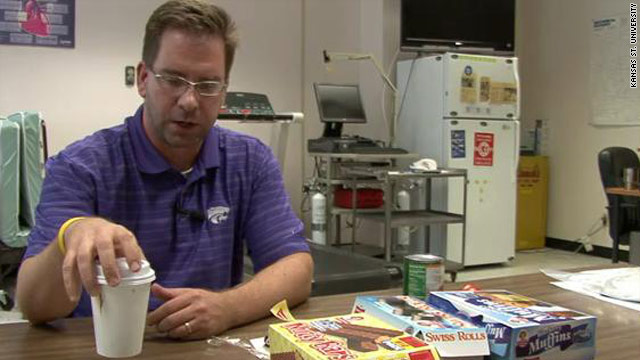
Mark Haub, a nutrition professor Kansas State University, spent 2 months eating a sugary snack, like a Twinkie or Hostess Cupcake, every 3 hours. He successfully shed 27 pounds and lost 3.9 Body Mass Index (BMI) points within the 8 week period.

The CNN.com article explains that the professor was trying to prove that calorie intake is what matters most in losing weight- not necessarily the nutritional content.

Haub went from a 2600 to a 1800 daily calorie intake. He still ate one serving of vegetables and one protein shake a day.

It's clear that calorie counting is an important part of weight-loss, and it's definitely encouraging to know that it can still be done if eating those hard to resist snack foods. I don't think that I could make my diet consist of only that, but having a sugary treat once in awhile can't be that bad!

Sunday, November 21, 2010

The Key to a Healthy Heart

The following article is from the Huffington Post:

(Note: I do NOT claim ownership)

http://www.huffingtonpost.com/joel-fuhrman-md/heart-health-prevent-and-reverse_b_783565.html

The author of this article, Dr. Joel Fuhrman, asserts that heart disease can be reversed, and even prevented, based on appropriate dieting choices. Dr. Fuhrman proposes a “high-nutrient, vegetable-based diet” of fruits and vegetables, beans, nuts and seeds. One of the aspects of Fuhrman’s article I was particularly impressed with is that the doctor took care to remind Americans that not all fats are bad, and that nuts and seeds contain fats that are key to cardiovascular health. This reminder in Fuhrman’s article is significant, as most Americans have very little medical knowledge and have developed an inherent aversion to the word fat. As a result, most people tend to lump “good” and “bad” fats together when making dietary choices, instead of carefully distinguishing between the types of fats they need and the types they should avoid. I also appreciated that Dr. Fuhrman noted that improvements in Americans’ cardiovascular health need not be gleaned through surgery or expensive drugs. I commend Fuhrman for this, as many Americans struggling with obesity try to find a “quick fix” to their problems in the form of dangerous surgery and medications instead of responsibly taking the time and energy to remedy their eating patterns. Hearing a medical professional encourage dietary changes and personal responsibility as a means to lose weight instead of medication and surgery, could empower people struggling with their cardiovascular health to make wiser decisions sooner, and prevent further plaque buildup in their arteries, instead of resorting to risky operations/expensive medications when it’s too late. On a more personal note, while I am not overweight, it has long been a goal of mine to improve my cardiovascular health. After reading Dr. Fuhrman’s piece, I know I’ll be incorporating more nuts, seeds and fruits into my diet for a long time to come.

Tuesday, November 16, 2010

Veg Out

Turns out all those years your parents nagged about eating your veggies were not just punishment. A new study reveals an extraordinary statistic: It may be possible to reduce the risk of atherosclerosis (hardening of the arteries) by a whopping 38 percent with a vegetable-heavy diet, according to an article on seniorjournal.com

The study used specially bred mice that rapidly develop atherosclerosis, half of which were fed an entirely vegetable-free diet and the other half consumed a diet of 30 percent vegetables (a mixture of dried broccoli, green beans, corn, peas and carrots).

Researchers tracked the mice for 16 weeks and found that the veggie-fed mice had not only plaques in their vessels that were 38 percent smaller, but also improvements in body weight and cholesterol levels in the blood.

Michael Adams, lead researcher, said "Although the pathways involved remain uncertain, the results indicate that a diet rich in green and yellow vegetables inhibits the development of hardening of the arteries and may reduce the risk of heart disease."

This study is believed to be the first to directly link increased vegetable consumption to decrease in development or progression of atherosclerosis.

So reconsider that bag of baby carrots next time you're choosing a snack.

Sunday, November 14, 2010

Patriotism: More Than Just Platitudes

The following article is from the Huffington Post (note: I do NOT claim ownership):
http://www.huffingtonpost.com/lloyd-i-sederer-md/military-service-and-beyo_b_781874.html

The author of this article, Dr. Lloyd Sederer, discusses what he calls "the invisible wounds of war," in describing the emotional/psychological damage our soldiers from returning Iraq and Afghanistan struggle with. While Dr. Sederer highlights some progress on the part of policymakers, private industry, and concerned citizens in helping combat veterans cope with the emotional toll of war and reintegrate into civilian life, he laments the insufficiency of such progress towards helping hundreds of thousands of veterans who are still quietly bearing their heavy emotional burdens and have not received assistance. As a patriotic American, I had a mixed reaction to this article. On the one hand I was encouraged by the progress government/private industry initiatives have made towards treating our veterans' emotional wounds. However, I felt saddened that yet another Veteran's Day has passed and we still haven't fulfilled our moral obligation as a country when it comes to taking care of our wounded (including those whose wounds are not immediately visible). I think an integral part of the problem is the very military culture our veterans chart their careers in. The "macho" culture of the military, at least according to the article, stigmatizes soldiers with emotional problems as "weak," which discourages them from speaking out and receiving the help they truly need. While I'm not sure how, I know we must work to change that perception within our military and help our combat veterans realize that knowing when to seek help and actively doing so, is a strength, not a weakness. Although no one person can change a culture as rigid as the military's immediately, I know that there are small things we each can do to make our veterans' lives better (e.g. donating even small amounts to organizations that provide soldiers with counseling). Such acts of kindness are the mark of a concerned citizenry that values its veterans and realizes that patriotism is more than simply platitudes.

Tuesday, November 9, 2010

Not-so-happy Happy Meals

The McDonald's Happy Meal has been a childhood staple for thousands of people around world. The cardboard box with the yellow arches, small fries, cheeseburger, drink, and the plastic toy are all the ingredients in creating the Happy Meal.

But not anymore.

The Board of Supervisors in San Fransisco have banned Happy Meals with toys in order to help efforts against childhood obesity, reports an article from CNN.com.

The article explains that the toys entice children into eating unhealthily. If McDonald's wishes to continue keeping toys in their Happy Meal, they must make them healthier by adding fruits and vegetables by December 2011.

While it's important to make sure children have healthy meal choices, it stings a little bit to see the classic McDonald's Happy Meal go.

Tea Time

Turns out your afternoon tea could be doing more for you than you thought. According to an article from healthcastle.com, studies have shown anti-cancer properties in the antioxidant polyphenols in tea.

Further studies suggest that polyphenols in tea may reduce the risk of gastric, esophageal and skin cancers if one consumes 4 to 6 cups daily and that just 2 cups of tea may lower the risk of ovarian cancer by 46 percent in women, help prevent blood clotting and lower cholesterol levels.

One Japanese study even found that green tea lowers death rates from heart disease.

However, not all teas have shown these properties; only those containing polyphenols.

Black, green, white and oolong teas derive their leaves from a warm-weather evergreen tree known as Camellia sinensis. The leaves from this tree contain polyphenols. Regardless of the processing method, black, green, white and oolong teas all contain polyphenols.

In fact, the article notes that tea ranks as high or higher than many fruits and vegetables in the ORAC score, which measures antioxidant potential of plant-based foods.

Photo Credit: Lexi Walshe

Monday, November 8, 2010

Health Myths Debunked!

In life you always hear myths concerning your health. From age old remedies to cure a cold, some myths have been around so long that many of us have come to accept them for the truth.
But before you drive yourself crazy stressing over that piece of gum you accidentally swallowed because you've been told it would stay in your stomach for several years, check out the truth behind some of the most common health myths , in the CNN article "The Truth about 12 health myths".
(http://www.cnn.com/2010/HEALTH/08/31/rs.12.health.myths/index.html)

Some surprising findings would be that gum does not stay in your stomach but passes within days.
Another interesting finding is that instead of having an apple a day to keep the doctor away, a handful of blueberries can work more effectively. So before you go to grab that apple, next time you are grocery shopping. consider buying a pack of blueberries.

Health myths are around because some of them are effective. However, you should always consult a physician about a health concern because it is always better to be safe than sorry.

Saturday, November 6, 2010

Facebook is Not Your Doctor

This article was written by Katie Drummond of AOL News (Note: I do NOT claim ownership of this article):

http://www.aolnews.com/surge-desk/article/for-accurate-health-advice-dont-rely-on-facebook/19701284

The article discussed concerns among doctors and health professionals over the results of a study released by Harvard University, indicating that increasing numbers of patients are looking to “Facebook” wall posts for medical advice on managing their diseases. According to the study, much of the free “medical advice” floating around on the social networking site was grossly inaccurate. On the one hand, I can understand wanting to commiserate with fellow patients and disease sufferers in a friendly and open social forum such as “Facebook.” On the other hand, I think it’s outrageous that people would actually think themselves qualified to be doling out medical advice to others online. I’m even more amazed that non medical professionals would not only be foolish enough to cavalierly dispense advice of such a serious and intimate nature on the internet but that others would be foolish enough to take it. What can’t you convince people of just by putting it online? And Facebook? Really? Could these people have chosen a more juvenile, confidence-shattering forum? I wouldn’t take medical advice from a poster on Facebook anymore than I’d take it from Colonel Sanders. The fact that doctors have to discourage their patients from taking their medical advice from a social networking site for teenagers is a truly troubling illustration of the extent to which these online social networks are pervading Americans’ lives, and I for one, am glad I no longer have a Facebook account.

Enjoy the Ride

As we college students enter the beginnings of the "real world," our childhood is rapidly evaporating into phrases like "when I was a kid" and "a decade ago" (seriously, when did we get so old?).

Back in the day our exercise was unplanned: racing down the street, pick-up games of neighborhood sports and late-night games of capture-the-flag. Now we need to schedule in a gym visit, which can be stressful in itself. What happened to those carefree days when we were healthy without having to think about it?

Well, it may not be so hard to reclaim that feeling of exhilaration and exercise-induced endorphins. Instead of trying to find time for the gym (which isn't much fun anyways), why not return to one of those childhood activities?

Cycling, better known as bike-riding.

It's a stress-reliever, it's a calorie-burner, it takes you back to the carefree days of your youth.

An Associated Content article claims: "Give your bike one hour, and in return you'll receive an undeniable sense of freedom, and an invigorated body, mind and spirit." What could be better than that?

Give it a go: the article lists 10 tips for beginner cyclists.

Wednesday, November 3, 2010

Walk This Way

As college students, it's difficult to find time for exercise. In fact, many students rely on walking around campus for their daily dose of calorie burning, but, as we all know, walking is not exactly a substitute for the gym.

What if it could be though? An article in Yahoo!'s Healthy Living section asked Bob Harper, a trainer from NBC's The Biggest Loser, to turn walking into a realistic replacement for sweating on the treadmill.

Harper created three simple walking program that utilizes strength training moves for a calorie-blasting workout that fits well into the busy life of a college student (and is free!)

Walking four to six times a week, choosing a different routine each day, can have great impacts on weight loss. Sounds simple enough to me.

Exercise Helps Prevent Colds


There are plenty of reasons to incorporate exercise into your daily routine, but what if it could also help ward off cold and flu symptoms?

20 minutes of moderate aerobic exercise a day can boost your immune system to prevent getting sick this winter, explains an article posted by CNN.com.

Exercising increases white blood cell circulation and produces endorphins- both which have positive effects on the immune system. This can lower your chances of catching a cold, or worse yet, the flu.

While there are several other factors at play when it comes to staying healthy, this seems to be an easy way to avoid those winter cold blues.

Sunday, October 31, 2010

Nap Time


Often life can be hectic at times leaving you tired and sleep deprived. However, there is a remedy for a lack of sleep. This solution is not a energy pill, drink or supplement but rather a simple nap.
In the article "Napping , a love story" (http://www.cnn.com/2010/HEALTH/07/30/napping.benefits.realsimple/index.html) it discusses some of the benefits of taking a nap.

One benefit is that scientifically it has been found that naps makes people more alert, creative and improves ones mood.
Next, a Harvard Medical School study showed that a 45 minute nap improves ones memory and learning capabilities.

So if you ever find yourself sleep deprived and craving energy do yourself a favor and throw that cup of coffee away and find a nice bed or couch to lay on.

Friday, October 29, 2010

The Pursuit of Happiness

The following article is from the Huffington Post:

http://www.huffingtonpost.com/dan-gottlieb-phd/is-happiness-necessary_b_770560.html

(Note: I do NOT claim ownership)

The author of this article, Dr. Dan Gottlieb, contends that the metrics people use to gauge their success in achieving happiness in life, (good health, successful children, wealth, etc.) are rather superficial. Dr. Gottlieb also asserts that people should abandon their quest for “happiness” and instead seek well-being, as we don’t truly know what “happiness” is nor how to achieve it. I don’t entirely agree with the author’s argument. First of all, I feel he makes too sweeping an argument in suggesting that almost all people use superficial metrics to gauge their pursuit of happiness in life, I know I certainly don’t. Secondly, I believe Dr. Gottlieb contradicts himself by advocating people abandon their search for happiness and instead pursue “well-being,” as the very metrics he decries as superficial (e.g. wealth, good health, having successful children, etc.) are in my mind critical to attaining well-being and are far from superficial. A far more accurate list of measures of “happiness” (or “well-being”) that would be truly superficial in my mind should include the desire for fame, wealth acquired through accident of birth not through perspiration and intellect, and pining for any number of materialistic items (e.g. sports cars, mansions, etc.). Wanting for health for one’s self and success for one’s children are not superficial, in any sense of the word. Lastly, while I agree that living a financially stable, relatively healthy life and raising intelligent children are not by themselves the keys to well-being, they’re certainly superior to being broke, sick and burdened with lazy and unintelligent children.

Thursday, October 28, 2010

How to Build Muscle from Scratch


The gym can be a scary place for someone who's never been there before. There are the big weights, the confusing machines that seems impossible to use, and the intense gym members who are already in great shape. For many beginners, getting healthy and building muscle may seem far out of reach.

But everyone has to start somewhere.

However, before you can start hitting the big weights, you first have to make sure that you are in good shape to start. “If your heart isn't trained to handle strenuous activity, you could risk seriosuly hurting yourself,” said Carey Swartz, a Binghamton University Physical Education Professor.

To start your journey towards strong and defined muscles, the best first step is to start a routine that focuses on cardio training. Thirty minutes of cardio everyday for 2-3 weeks will condition your body and heart for strength training.

After a few weeks of cardio, your body will be prepared for weight training. You'll want to build a strong foundation of muscle throughout your entire body, so it is best to do a total body workout.

“A total body workout is when you work all of the major muscle groups in one single workout,” said Paul Nowak, a BU student who has been weight-training for over 5 years.

There are six major muscle groups that are the focus of all workouts. They include the biceps, triceps, shoulders, legs, chest, and back.

A total body workout is best done via circuit training. Circuit training works all muscle groups by using low weights, and high repetitions of lifting.

“One exercise per muscle group will round out your total body workout,” Nowak said. “And you'll see results all throughout your body, which is encouraging.”

A general rule of workout thumb: once the weight you're lifting doesn't seem challenging, it's time to add some more.

While circuit training looks to work all of the major muscle groups in one workout, strength training focuses on only two major muscles at a time. This allows you to do more types of exercises -and therefore more work- per muscle in one session.

But make sure to hit all of the muscle groups- you can risk making your body disproportionate.

“I've seen a lot of guys at the gym who will just focus on building their upper body,” Paul said. “And they'll end up with huge arms and shoulders, but small chicken legs.”

Once you've gotten on board with a strength training routine, there are different methods you can use to intensify your workout to get maximum results.

“I like pyramid sets because I feel myself pushing through to my maximum potential,” Nowak said. “It feels good to start at 20lb bicep curls, and max-out at 80lbs.”

While it might take a long time to climb up to 80lb bicep curls, it definitely isn't impossible. Weight-training is appropriate for people at all levels of experience, it's just a matter of starting where you're comfortable, and taking baby-steps from there.

“Doing the exercises isn't difficult,” Swartz said. “The hard part is getting yourself off the couch and starting a routine.”

Grad School Applications 101


A little house on the prairie with Old Yeller running about is the vision that fuels many of us to go to college. Marriage, children, house, car, 401K, vacations they’re all things people hope to achieve after their college career.

These hopes can be subtle reminders during senior year of the importance of graduate school and the opportunities it can offer. Given the state of the U.S economy and job market, grad school has become a popular alternative.

Dealing with grad school applications and exams can generate a lot of stress. Learning to handle stress properly will help you stay healthy now and, in a world filled with stressful situations, in the future.

The first step in coping with the process of grad school applications is acknowledging that this is a stressful time and asking for help if you need it. Not doing so can be detrimental says, Wren Fritsky a career counselor at Binghamton University.

“The ones that I am concerned about are the ones that don’t take advantage of help. Fritsky said. “Reality is acknowledging stress and seeking help.”

Fritsky, in her professional role tries to teach students to cope with the stress with tools that will help them psychologically and emotionally. These tools vary from doing research, interview practice and resume and cover letter training.

Because Grad school will be time consuming and intense, it should be more than a Plan B for people who cannot find a job after college or whose “Plan A” fell through, Fritsky said.

Foremost, grad school should be your main plan because people tend to succeed in things that are the number one priority on their list, so making grad school your number one plan can help relieve stress.

However, all is not lost if you haven’t been thinking about grad school until your senior year because there are resources out there to help students.

“Students just need to ask for help” Fritsky emphasizes.

Former Binghamton Undergraduate Alyssia Agnitti knew that she wanted to go to grad school for teaching and took the necessary steps to prepare.

“I declared myself a math major and took the classes I needed to take,” she said. “When senior year came I did my research and applied to the schools that fit me.”

Now Agnitti attends Stony Brook University where she is working toward her master’s in math education.

Lastly, students should do the necessary research on the grad school and programs that they would like to go to. Don’t just listen to others, Fritsky said.

“Do research. Listen to yourself, not your parents, friends, etc because at the end of the day you will have to live with your decisions,” she said.

If you are going to go to grad school it should be where you want to go, not where others want you to go.

“If you are true to yourself then the grad school process because much less stress- ful” Fritsky said.

So when grad school application time comes around don’t fret. Life will present you with enough situations to stress over.

Wednesday, October 27, 2010

How to Mend a Broken Heart

Swollen eyes, upset stomach, dizziness, weight gain: the physical manifestations of emotional damage. A broken heart is epidemic among college students, but it is not incurable. There are several ways to concoct your own remedy:

Brad Greenstein, sophomore biology major suggests getting rid of those little reminders that can poison a good mood when accidentally stumbled upon (old clothes, mix CDs, letters, and photographs).

Not only does Brad recommend getting rid of the memories of the someone old, but also replacing them with someone new. “Rebounding is not always a bad thing,” Brad said.

Nikki Belfiglio, a 20-year-old living in Brooklyn, NY, has a different method.

Her approach is ritualistic; she goes through a week of mourning, citing an episode of the television series “Gilmore Girls” as her inspiration: “You have to wallow.”

Nikki’s customs include a crying period, yes, but also a transformation. A change of appearance is her prescription. “I need to renew myself. Usually I go out and get a new haircut or hair color and sometimes a piercing.”

After her post-breakup metamorphosis, Nikki also makes sure to avoid the harmful side effects that often accompany a break up.

Her routine includes: exercise, to work out the pent-up frustration, time with friends, to fill up the empty time formerly filled by a boyfriend, and healthy foods, to avoid weight-gain and self-loathing.

If the damage is more than you can handle on your own, there are other options. Here at Binghamton University, the University Counseling Center uses an appointment-based system to ensure all students have access to the mental health services they need. Group counseling is also available.

If talking to a stranger is not appealing, “the home remedy,” a network of friends and family, often makes for the best treatment.

Sunday, October 24, 2010

First Health and Wellness Story: How to Beat Back Finals Stress


You’re hunched over your desk; it’s 4 AM, you try to focus; your final exam is just hours away. Unfortunately, you’ve been mishandling the stress. The only things worse than your nutritional intake are your sleeping patterns and studying habits.

But there’s good news. Final exams don’t have to overwhelm you.

Binghamton University (BU) senior and resident assistant (RA) Tara Lynch advises students on her floor the best way to cope with finals week stress is working diligently throughout the entire semester. Lynch tolerates the stress by making “daily to-do lists, weekly task lists, and long-term goals.”

Lynch witnessed firsthand the consequences of inadequate preparation/time management materialize into an almost palpable anxiety among her peers.

“As an RA, I have dealt with many situations where freshmen (among other levels) students have approached me in panicky behavior […] I have seen people break at the last minute and try to inefficiently find ways to cope with the pressures of finals week [….]”

Dr. Deanne Westerman, a BU psychology-memory professor offered similar advice.

“Is it better to cram for an exam or space your study sessions? The answer is very clear: Information is remembered better if it is studied across many sessions rather than learned in one large block of time,” Westerman said. “Five one-hour study sessions will lead to superior memory more than one five-hour block. This is a very robust and reliable finding known as the spacing effect in memory.”

To improve memory and boost exam performance, the psychology professor recommends students build study strategies around the retrieval of information. According to Westerman, this approach is commonly referred to as “the testing effect in memory.”

“Study sessions that include practice tests and flashcards will be far superior to ones that involve rereading the book, reviewing the notes or listening to your instructor or TA review the material,” she added.

Proper time management and study skills are not the only keys to successful stress management during finals week. According to Binghamton Health and Wellness Studies Professor Cary Schwartz, proper nutrition and exercise are equally vital.

Exercise increases brain endorphins (“feel-good” chemicals), Schwartz said. He recommends during finals week students emphasize fiber, protein and greens, and limit sugary, fattening foods (i.e., energy drinks and “junk” foods).

Like Lynch, Schwartz has seen the consequences for students who make poor decisions during finals week. “I can tell most students are exhausted during finals week from lack of sleep, lack of focus and low energy levels from lack of nutrition,” he said

A different attitude can also be critical.

“On the one hand, while I feel tense during finals week, I also feel kind of excited and almost look forward to it,” John Charitable, a BU senior, said.

Charitable views finals week as, “an exciting personal challenge to see how well I know all the stuff I studied.”

Preparation is critical for Charitable. “I try to study with my friends,” he said. “A lot of times that’s some of the best fun we have. There is something positive about finals, because it can bring you closer to people.”

He wasn’t always like this, especially first semester. “It had to be after 11 at night when my friend Brian called. He said to me, we’re going hiking now, get ready. And I said to him, ‘Dude, we have a final to study for.’ And he said, ‘I don’t care, we’re going.’

Charitable wouldn’t see his books, or bed, until 1 a.m., yet he didn’t seem to care.

“We went up to the top of the hill behind Mountainview,” he said. “That was a very relaxing experience to just get out with friends. I felt so much better afterwards.”

That evening, Charitable learned an important lesson: “I realized finals are important but so are my friends, and I was determined to not let exams stop me from enjoying the end of my first semester at school.”

How to get those abs you want

As a college student life can be hectic at times. Keeping up with a gym routine can be difficult. Also finding the right exercises that would produce the best results can sometimes be hard to find.

But don't fret because those rock hard abs that you've always wanted are still attainable.

According to Karon Karter, author and trainer if you implement the following in your ab workout it can make it more effective.
http://www.health.com/health/article/0,,20411766,00.html

First, you should "move from your waist." You should only move from your bottom rib up.

Next, you "tighten up". You should feel tension and tightness when you do your movements. This shows that you are really working out your muscles.

Next you should "exhale deeply". This helps strengthen your abs and protect your lower back.

Lastly, you should a "after- burn" workout to help burn off the extra fat on your stomach.

I believe these tips will work because it is just improving the effectiveness of your ab workout.
So if you follow these tips in your ab workouts you should be seeing results in no time!

Wednesday, October 20, 2010

The Right Outlook As Key To Weight Loss

The following article is from the Huffington Post (I DO NOT claim ownership):

http://www.huffingtonpost.com/the-inner-weigh/lose-weight-by-making-pea_b_757712.html

The author of this piece asserts that readers can most effectively lose weight by not engaging in self-loathing and by not choosing a ‘wrong’ reason to lose weight (e.g. impressing others). While I agree with the author on the first point she makes: that resenting one’s self can lead to a downward spiral that ultimately cripples weight loss efforts, I couldn’t disagree with her more on her second piece of advice. For a professional fitness instructor/nutritionist who counsels women on weight loss, the author must surely recognize that a plurality (if not an outright majority) of women who seek her advice, are doing so to ultimately make themselves more appealing to men. What the author fails to realize is that impressing members of the opposite sex with one’s physical fitness is compatible with boosting one’s self esteem, and is a uniquely human attempt to answer biology’s call. A desire to attract others is a perfectly normal and healthy human phenomenon. I also believe that each of us owes it to not just our significant others but to family and friends as well to keep ourselves fit and healthy. If a person is not motivated enough to get (and stay) in shape for himself, perhaps the consequences of his poor eating choices will manifest themselves in the concerns and criticisms of his loved ones, and will serve as a powerful enough incentive for him to at least reassess his lifestyle.